Posts Tagged With: equestrian

The Blue Tarp Mystery

Just finished:  Mind Games (A Diana Racine Psychic Suspense) by Polly Iyer.

My husband and I used to go camping with our horses at a wonderful spot in the coastal mountains south of San Francisco. While there are numerous places to camp with horses in California, Jack Brooks was unique because it provided 12×12 individual paddocks for the horses, lovely restrooms with hot showers, electrical hookups for campers and a marvelous group picnic area with a number of amenities. Since the horses were stalled in a hollow, downhill from the camping area, we didn’t have to have them right next to where we slept and ate. Altogether a very civilized way to camp.

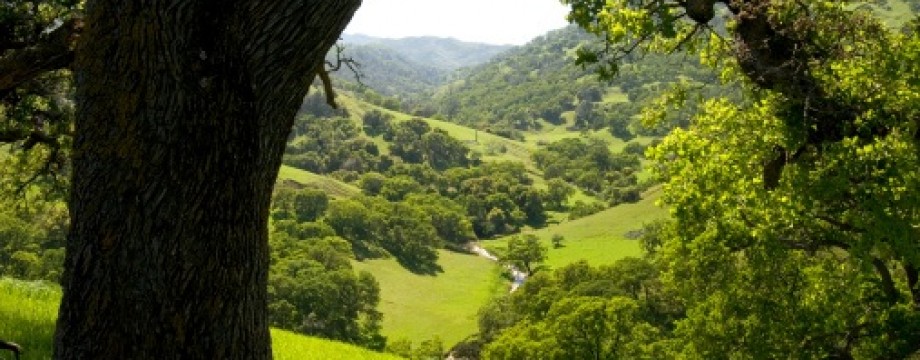
The most important features, of course, were the marvelous trails that descended down into beautiful wooded canyons lined with Tan Oaks and Redwoods. We could ride for as long as we wanted—go on a one-hour loop, ride for a few hours then stop and picnic, or ride all day on an extensive trail system that went along the crest of the mountains with a view of the Pacific Ocean.

Jack Brooks wasn’t easy to get to. The dirt road off the main park road was so narrow the rangers set up a schedule for when you could use it. You could only drive into camp for the first 15 minutes after the hour or leave camp during the 15 minutes after the half hour. (It took approximately 10 minutes to drive the steep, twisty trail.) The narrow path could be quite unnerving—no matter how wide I tried to swing out, my long trailer always scraped the side of the hill at one spot. A couple of curves, with sheer drop-offs, took my breath away every time we went around them. Even so Jack Brooks was so popular you had to make reservations a year ahead of time.

JB developed one draw-back over the years—feral pigs. The first year it was kind of cute to see the huge sow with her batch of piglets trot up the hill to wait for nightfall when they would come down and rummage through the manure pile and scavenge for any feed the horses might have left. Unfortunately, pigs multiply very quickly, and they had no fear of humans. After a few years, they became so destructive and dangerous that the rangers hired hunters to thin the herds. These were domestic pigs that had gone wild, not native species, so they really didn’t belong there.

One year we had an unusual happening. I always kept our saddles and equipment next to our horses, covered with a tarp to protect them from the elements. One morning, I went down to feed and discovered my nice new blue tarp had disappeared. I searched all over the horse area but couldn’t find it. Some people had left after dark the night before, but I couldn’t imagine why they would take it. It was a real head-scratcher.

Later that morning as we rode out of camp and up the opposite hill, I happened to notice a patch of blue off to my left. We went over to investigate, and I discovered a ripped-up, mud-stained, blue rag that once had been my crisp, shiny tarp. Apparently the pigs had made off with it and proceeded to destroy it. I never could figure out if maybe a boar had hooked a tusk through one of the grommets and couldn’t get it loose, or if the pigs had simply decided to play with it. It couldn’t have been an easy task to drag it through a hole in an old fence and approximately a quarter of mile up the hill, but they did it. After that I kept our tack in our trailer. I didn’t want anything else to go missing.

Do you have a special spot in nature where you like to spend time? A great place to ride or hike? An unusual encounter with wildlife? Tell us about it.

Categories: Camping, Horse camping, Horses, Mystery, Redwoods, Trail riding, Wild pigs | Tags: , , , | 10 Comments

Wyoming Escape

My first book, Wyoming Escape, is now out on AmazonBarnes&Noble and Kobo. Apple iBooks and others coming soon.

One dead body is frightening enough, but a second one, plus a dirty cop, sends chef Mikela Richards fleeing for her life. The ultimate city girl finds a safe hiding place on a Wyoming Dude ranch, where she tries to discover if the murders are connected to the mysterious computer memory stick she found in her car. But her fragile feeling of safety is disturbed by a compelling Marine, home on leave.

Back from Afghanistan to heal both physically and emotionally, Shawn Saunders recognizes the type of fear in Mikela’s eyes—it’s one of the things he’s come home to forget. Even though he knows it’s a bad idea, he can’t stop himself from trying to help her, while she’s even more afraid of letting him. In spite of their reservations, neither can resist the pull of their attraction.

Categories: Cowboys, Dude ranches, Horses, Romantic suspense, Western romance | Tags: , , | 4 Comments

Riders and Writers


What I’m reading: Gnome on the Range by Jennifer Zane       http://tinyurl.com/c4yztwh

While watching a video of an Olympic equestrian contest, I nearly fell out of my chair at a commentator’s remark to the effect that “the riders weren’t really athletes.” After regaining my equilibrium, I came to the conclusion the guy must never have ridden at a competitive level. What was even more jaw-dropping was he made the comment about a rider in Three-Day Eventing—the equestrian equivalent of the triathlon.

As the name implies, a three-day consists of three separate competitions whose scores are combined to determine the winner. The first day is a dressage test, the second is a cross-country race against time over jumps, and the third is jumping in an arena.

On the first day, the horses are well aware of what is coming and most will be eagerly anticipating the exciting cross-country. But in a dressage test, the horse and rider must execute a series of precise movements at specific points within a small arena. Even the slightest error adds to your overall score. (Eventing is scored sort of like golf. Lowest number of errors wins.) So you have to get your horse into a quiet, relaxed mode where it is listening to you and concentrating on the dressage moves. This can be quite a challenge and at times the riders look like they are mounted on powder kegs ready to explode. To achieve the calm focus, you must be still and quiet, and communicate with subtle, precise cues, which require superb muscle control.

Day two, the horses and riders gallop plus or minus four miles at top speed over varied terrain while jumping 40-45 solid and challenging obstacles. The horses have to be extremely fit, amazingly courageous and highly motivated. To ride an equestrian athlete of this level, you have to be equally fit, courageous and motivated. Among other things, you ride most of the course in what is called a two-point position, where you are partially standing in the stirrups with your seat out of the saddle while maintaining your balance over hills, drops, water, or whatever else the designers throw at you. And this is not counting the jumps themselves. Can you say wet noodle legs by the end?

Since every movement of your body affects the horse’s balance and ability to perform, you need tremendous core strength to keep still and not interfere. You also need strong legs, as I mentioned earlier, and strong arms to control and sometimes contain an overly excited, 1200 pound animal that has a mind of its own. As a result, most competitive riders do extensive aerobic and strength training, cross-train in another sport, and spend hours each day on a variety of horses, perfecting their skills.

The last day is the show jumping phase, where the horses must negotiate a demanding, intricate jump course within a specified time. Knocking down a rail or refusing to jump affects your score. These jumps are much higher and closer together than those of the previous day, which add to their difficulty. Again, balance and control are imperative.

To make it even more demanding, many of the top riders compete more than one horse at a time. This means double the physical effort and double the mental stress of having to get the best out of distinctly different equine personalities. Don’t tell me these riders aren’t athletes!

Of course, most casual riders, like most weekend skiers or tennis players, aren’t superbly fit athletes. And lots of people have taken horse rides where they’ve just been passengers, so they tend to think that’s all there is to riding. They couldn’t be more wrong. To compete in any sport, including equestrian events, it takes dedication and skill and athletic prowess.

This attitude reminds me of the mindset writers often encounter when talking to non-writers. Most people have no concept of the effort, dedication and hair-pulling mental agony writers go through for their art. The off-hand dismissive, “anyone can do that” attitude is infuriating to say the least.

Have you experienced this kind of put-down? What has been the most objectionable or ignorant comment that you’ve had to deal with?

Categories: Uncategorized | Tags: , , , , , , , , , | 13 Comments

Horses and Villains

Coming Soon:

Wyoming Escape
Two dead bodies.
One dirty cop.
Will she be next?


What I’m reading: BushWhacked, A Thea Campbell Mystery by Susan Schreyer

I don’t know about you, but the villains who scare me the most are the quiet ones you don’t know are after you. The stalkers, revenge seekers, serial killers. They don’t attract attention. Instead they stubbornly and relentlessly do their thing in the background.

Oddly enough, there are horses like this too. While not intent on hurting anyone, they can be quite determined to get their own way. When the Introvert-Thinker decides on something, it can be difficult to change his/her mind.

My husband’s horse Koko is a strong I-T. A sweet, laid-back Quarter Horse type, she is the poster child for stubborn. She’s quite happy carrying along a beginner, non-demanding rider, but if you ask for something that takes more energy than she’s willing to put out at the time, you should be prepared for a difficult “discussion.” One time when our trainer was giving my husband a lesson, Koko absolutely refused to take the right lead at the canter. (When you are on a circle, you want the inside front leg to move first [lead]. It’s more balanced and comfortable that way.) So the trainer hopped on to fix the problem. About ten minutes later she gave up in frustration. It wasn’t going to happen that day.

On the other hand, the Introvert-Thinker can be great for inexperienced riders. Nothing much ever bothers Koko, so she takes good care of her passengers. We can put anyone on her and they will have a good time. She’s our “pony -ride” horse. And since hubby only rides occasionally, her lazy attitude works well for him.

Even though she’s laid-back, Koko is definitely not dull. She is a thinker, with a busy mind and likes to play with things when she’s bored. One time my husband put up lights on the eaves of the barn. A couple of days later she had removed them all. She is also a master at turning the barn lights on and off, opening gates, untying ropes and even removing shoe laces! As my husband says, she has a very dry sense of humor—which he thoroughly enjoys.

To be quite clear, it’s very rare for a horse to deliberately try to hurt anyone, but, just as with people, there are occasional bad apples. Perhaps they’ve had bad treatment or just have a screw loose. An I-T with a personality disorder can be really dangerous because you aren’t expecting a problem. But watch out. They will plot to get you. I’ve encountered a couple and the experience wasn’t pleasant.

One time I was trying out a sale horse. After unsuccessfully attempting to scrape me off on a tree, he started rearing. I leaned forward to keep my balance and he quite deliberately swung his head back and smashed me in the face. After I wiped off the blood and picked up my broken glasses, I led him back to the barn. He’d gotten what he wanted.

So, are your villains Thinker or Reactor types? Do they plot behind the scenes, planning an elaborate revenge? Or do they get caught up in a situation and respond without thinking? Both are scary. Which is worse?

Coming Soon:  Wyoming Escape
                           
Two dead bodies.  One dirty cop.  Will she be next?

Categories: Uncategorized | Tags: , , , , , , , , , | 6 Comments

Horses and Heroines

What I’m reading: The Girl in The Box by Janet Miller – Futuristic tale about true love – what else?

In my last blog three weeks ago I talked about different horse personalities, particularly the Extrovert Thinker as typified by my horse Star and how this type relates to Alpha Heroes. Today, I’d like to discuss the Extrovert Reactor and the smart-ass, quirky heroine.

First, a quick note. These personality types are on a continuum, of course. Some are more extroverted than others, some are less reactive. Some can change—become less introverted or more of a thinker. But their basic type remains and influences their actions.

Portia at 29

My mare Portia, a grey Anglo-Arab (half Thoroughbred and half Arabian), is a typical Extrovert Reactor. She’s very sensitive to stimuli and hyper-aware of her environment. Even at age twenty-nine and retired, she can be challenging and needs an experienced handler. Not that she’d ever deliberately hurt someone, she just tends to react first and think later.

She’s also a horse that really enjoys life. She loves to play and will try her best to please. She’s the one who yells a greeting when she sees me and comes running up to the gate eager for a treat or an outing. In the show ring or a parade, when she “turned on” all eyes were on her. She also used to fly down a new trail with her incredible walk, eager to see what was around the next corner. Even though she can be a pain in the butt, her exuberance is a lot of fun.

When I first got her as a seven year-old, she was ready to spin and bolt at the slightest provocation—a rock that looked funny, a horse scratching it’s ear with a hind leg, a COW on the trail! She soon learned bolting wasn’t acceptable behavior so she tried others. Like teleporting half way across the arena or jittering in place or jumping straight up. I eventually discovered that part of the reason for her reactivity was because she was in pain. She needed chiropractic care (just starting with horses at that time and not widely accepted) and a correctly fitted saddle (which proved to be almost impossible to find). Once those problems were solved, she settled down a lot.

But she still retained her quirky personality. One time we hung a bright pink piñata in a tree near the pasture and she and my daughter’s horse decided that it was a decidedly SCARY thing. They came up close to the fence, took a look, then snorted and high-tailed it back to the barn. Duchess stayed there, but Portia couldn’t resist. She’d dance back up to the fence and watch big-eyed as one of kids swung at the colorful unicorn. Then she’d take off for the other end. A few minutes later, she was back, waiting to be “scared” again. I swear she was disappointed when the thing finally broke and everyone went away.

Her playfulness and sensitivity made her a delight to train. She was eager to learn new things and would try her hardest to do what I asked. Of course, this meant I had to be quite careful  with my corrections so I wouldn’t discourage her. In general, she’s always required a very light hand. As a result, I got a horse responsive to the slightest cue and that just about read my mind.

Riding her was never dull. As I mentioned, she is a sweet love and would never deliberately hurt anyone. But she could be a handful. She saved my bacon a few times—even if she caused the problem in the first place.

One time we were exploring in the mountains and I twisted around in the saddle to get a map out of the saddlebag behind me. Just then a pair of fawns exploded across the trail, directly in front of us. Portia spun aside–out from under me because of the way I was turned. I ended up hanging off her, one hand somehow on her bridle, one hand on the breast collar, one foot still in a stirrup under her belly and the other still in the stirrup on top of her back. Because of how far down I was and the fact the saddle was slipping, I couldn’t get back up. Another horse might have freaked and tried to get rid of me, but Portia stood perfectly still and waited for me to work myself loose of the stirrups and drop to the ground. I really couldn’t blame her for dodging  the fawns and I certainly appreciated her being sensible.

She reminds me of the funny, smart-aleck heroines who react without thinking things through. They may get into trouble for their impulsiveness, but they care about people and manage to come out okay. I can think of several. How about you?

Opportunity Knocks at Marketing For Romance Writers Summer Camp. Open the door to our MOTTO: SEEK, TEACH, LEARN, SHARE, SUCCEED

 http://groups.yahoo.com/group/MarketingForRomanceWriters/

Categories: Uncategorized | Tags: , , , , , , , , , , | 6 Comments

Personalities, Horses and Heroes

Opportunity Knocks at Marketing For Romance Writers Summer Camp. Open the door to our MOTTO: SEEK, TEACH, LEARN, SHARE, SUCCEED

What I’m reading: Satin Pleasures by Karen Docter – Fun frolic about keeping priorities straight.

Next week I’ll be hosting Pauline Baird Jones who is going to talk about being teachable—an important ability for everyone, including riders and writers. So this time I thought I’d talk about how personality influences teaching and learning.

StockFreeImages.com

I started training animals when I was a pre-teen, taught school in my 20’s, educated my kids (at least in some things) as I raised them and  ended up teaching engineers to use sophisticated software to design computer components. Along the way I learned how much the personality of the animal or human influences how they learn.

My first instructor in this area was my horse, Star, who I talked about last time. I became pretty successful in teaching her to do a lot of different things. Then her second son, Junior, came along and I discovered I needed a different set of tools to work with him. And this has been true with each horse I’ve dealt with.

You can classify horses as having one of four basic personalities. Just like with people, they can be Extroverts or Introverts. They also can be Thinkers or Reacters (emotional). So you can have an extroverted thinker, an extroverted reacter, an introverted thinker and an introverted reacter. Then you add their gender and their experience into the equation and you have a complicated being that requires some thought to train effectively. Each personality type has its pluses and minuses and is good for different things and different riders.

Star was an extroverted thinker. She was friendly, self-confident, rarely afraid of anything and willing to try whatever I asked her. She was also strong-willed and could be difficult. Horses are prey animals and, as such, are basically “scaredy cats.” In the wild they stay alive by being hyper-aware of their environment and ready to run on an instant. Domestication hasn’t done away with that basic instinct. A horse whose emotions dominate sees threats everywhere and can react without thinking. My Portia is a prime example. When I first got her, she would whirl and try to bolt at the slightest provocation. Typical extroverted reacter.

Star, on the other hand, rarely ever reacted to anything. Her version of a spook was to stop, study the offending object for a minute and then go up and sniff it. She had grown up along a railroad track and had experienced earth moving equipment moving around her space, so she learned early that loud noises and big things weren’t usually dangerous. Given her basic self-confidence, she extended this attitude to the rest of her world. You could surprise her, of course. She wasn’t bothered by the fire engine racing down the street, but nearly jumped onto our neighbor’s porch when it suddenly blasted its siren right alongside her. Scared the dickens out of me too!

Because of her personality, Star was easy to teach, once we started communicating properly. She enjoyed learning, experiencing new things and exploring new trails. Portia likes to learn too but gets upset easily, which shuts down her brain. On the other hand, Glory, an introverted reacter, is harder to teach because she’s afraid to try new things. And my husband’s horse, Koko, an introverted thinker, can be down right stubborn about trying anything new. So I have to adjust my methods for each personality.

These personality styles correlate to the characters I write about too. Alpha heroes, particularly military men, are commonly the extroverted thinker type. Brave, self-confident, ready to take on anything. Spunky, smart-ass heroines are usually extrovert reacters. They often take chances, letting their emotions rule their common sense. The quieter “beta” heroes, introverted thinkers, stubbornly do what they think is best. And often the heroine starts out as an introverted reacter but changes during the story.

What personality types do you like best? What type are you? What types do you like to read or write about?

I’m helping to promote an upcoming program for writers called Marketing for Romance Writers Summer Camp. It takes place July 14th – July 15th. To receive updates for the camp or learn more about it and MFRW, please sign up here:

 http://groups.yahoo.com/group/MarketingForRomanceWriters/

Categories: Uncategorized | Tags: , , , , , , , , , , , | 6 Comments

Blog at WordPress.com.